







Restaurant Technical Operations: Supporting Scalable Digital Growth
June 9, 2026
Written by



SHARE ON SOCIAL




Meet the Technical Operations Team:
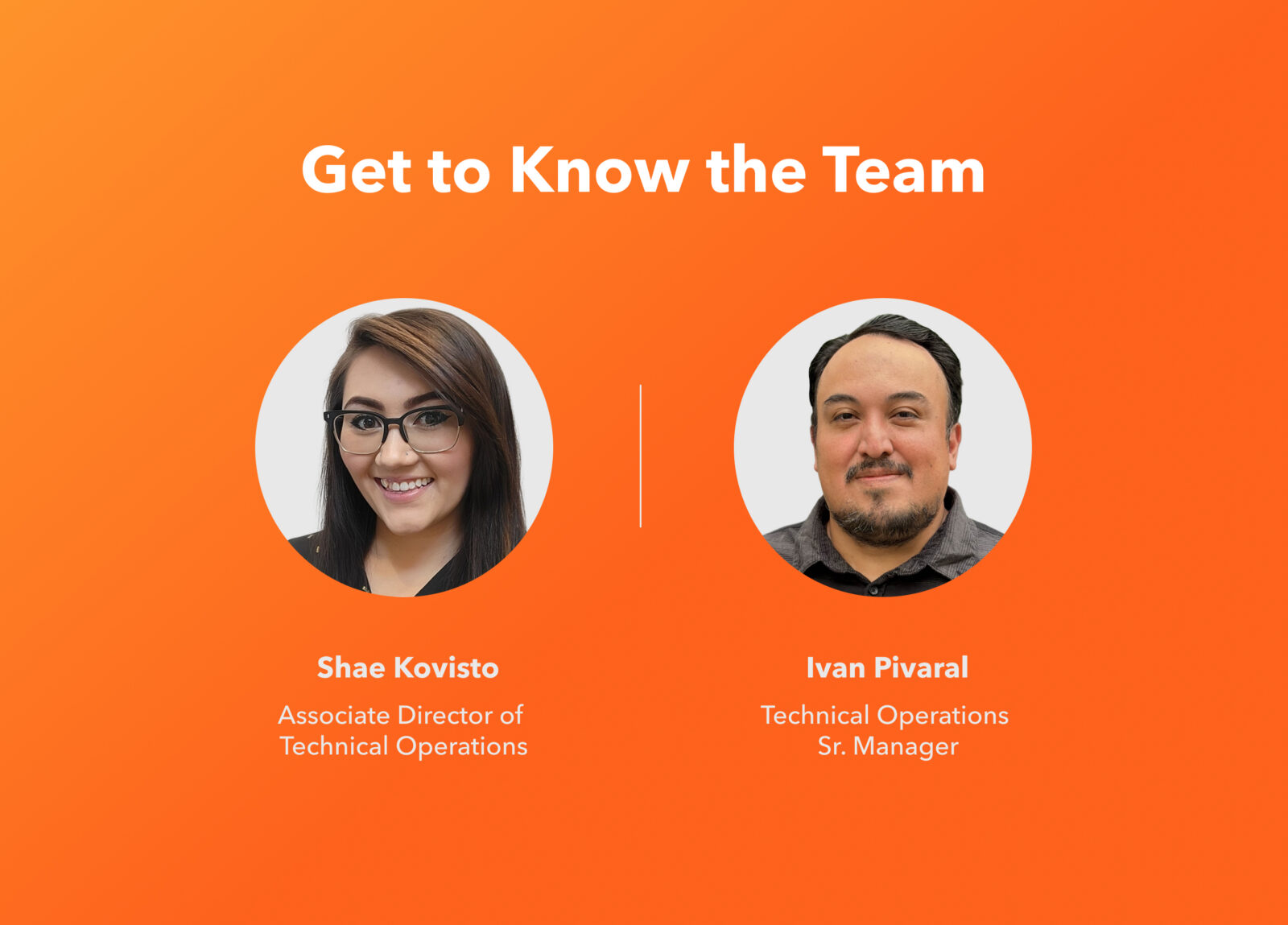
Shae & Ivan
At 5&5, Technical Operations helps enterprise restaurant brands manage the systems, integrations, and operational workflows that support scalable growth. From digital ordering ecosystems to new store opening readiness, the team helps ensure restaurant technology remains reliable, connected, and operationally efficient across locations and channels.
In this Q&A, Shae Kovisto, Associate Director of Technical Operations, and Ivan Pivaral, Technical Operations Sr. Manager, share how Technical Operations supports operational scalability, system reliability, and long-term digital growth for restaurant brands navigating increasingly complex technology environments.
What are the main problems your team solves for restaurants?
Shae: We solve operational inefficiencies that impact ordering accuracy, menu management, integrations, and overall guest experience. This can range from troubleshooting complex ordering logic to improving workflows that reduce manual work for restaurant technology teams. A large part of our role is identifying operational friction before it becomes a larger business problem while also ensuring brand initiatives, from day-to-day updates to large-scale projects, are completed on time and executed at the highest level.
Ivan: Our Team mainly supports issues related to menus, pricing, ordering behavior, integrations, and store setup. We help solve problems that can impact the guest experience or store operations and work closely with partners to make sure updates are completed correctly and on time.
What kind of systems or processes do you manage or improve?
Ivan: We manage processes related to online ordering, POS setup, menu and pricing configurations, Olo maintenance and management, and NSO readiness. We’re always looking for ways to make updates more consistent, improve documentation, and reduce manual work for stores and internal teams.
How does your work impact day-to-day restaurant operations?
Shae: Our work directly impacts how efficiently restaurants can operate digitally. When menus function correctly, integrations communicate properly, and operational workflows are streamlined, restaurant teams can spend less time troubleshooting and more time focusing on guests. Even small technical improvements can significantly reduce friction at the store level.
Ivan: Our work helps stores avoid disruptions. Whether it’s making sure orders flow correctly, prices are accurate, or a new store opens with everything configured properly, we help create a smoother experience for both store teams and guests.
Why is Technical Operations essential for restaurant growth and scalability?
Ivan: We help create repeatable processes and reliable systems that support new stores, menu updates, and operational changes without creating disruptions.
Shae: As restaurant brands grow, operational complexity grows with them. Technical Operations helps create scalable systems that allow brands to expand without sacrificing consistency or guest experience. Whether it’s supporting new locations, new ordering channels, or evolving menu strategies, our team helps ensure the operational infrastructure can support that growth sustainably.

Can you share an example of a challenge you helped solve?
Shae: A lot of the challenge comes from keeping menus, pricing, and updates consistent across different ordering platforms. Menu sync issues occur when changes do not carry over correctly between systems, such as an item or modifier appearing differently on third-party delivery apps compared to the POS or menu tool.
Pricing issues can arise when platforms apply rules differently, so a price or promo applies in one place but not another. We also encounter limitations with third-party integrations that do not support more complex menu setups or real-time updates.
When that happens, it can lead to guest confusion, extra work for store teams, and lost revenue from incorrect orders or missed sales. Our focus is on closing those gaps so everything stays aligned across systems.
Ivan: One example was leading large-scale pricing updates across multiple store locations. When I started supporting the brand in 2022, there were only five pricing tiers to manage. By 2026, that number had grown to fourteen, significantly increasing the complexity of maintaining accurate pricing across the stores.
To support that growth, we implemented a multi-layer QA validation process where every pricing tier was reviewed and verified before deployment. At the same time, our vendor improved the store file export process, allowing us to strengthen controls and eliminate pricing discrepancies.
Previously, stores would occasionally report incorrect prices after updates, requiring rework and delaying implementation. By combining enhanced validation procedures with the improved export process, we reduced pricing errors to virtually zero and streamlined the entire rollout process. As a result, pricing updates that previously required multiple correction cycles could now be completed in less than three days.
Most importantly, these improvements ensured that guests consistently saw accurate pricing regardless of location, while giving the brand a scalable process that could continue to support growth without sacrificing quality or operational efficiency.
What makes 5&5’s approach to Technical Operations different?
Shae: Our approach is highly collaborative and hands-on. We don’t just identify problems, we work closely with brands, platform partners, and internal teams to fully understand operational impact and build practical solutions. We focus heavily on long-term scalability rather than temporary fixes, which helps create stronger operational stability over time. We see ourselves as an extension of our brands, so when they succeed, we succeed.
Ivan: I think what makes 5&5 different is the level of collaboration and support between teams. We work closely with brands and partners to understand operational needs and focus on finding practical solutions that work long term, not just quick fixes.
What’s one thing restaurants often overlook when it comes to operations?
Shae: Restaurants often underestimate how interconnected their operational systems are. A small change to a menu structure, fulfillment setup, or integration can create downstream impacts across multiple platforms. Having strong operational oversight and processes in place is critical to maintaining consistency and avoiding larger issues later.
Ivan: Small operational changes can have a bigger impact than expected. Something like a pricing adjustment, menu setup, or fulfillment setting can affect multiple systems, so planning and testing are very important.
What tools or strategies are you most excited about right now?
Shae: We focus on tools and processes that improve visibility across digital operations and reduce manual work for teams. That includes building stronger QA processes, improving menu management workflows, tightening platform integrations, and creating more consistent reporting so brands can spot issues faster and make quicker decisions.
Better reporting and QA surface problems earlier, like menu mismatches or integration issues, before they reach the guest. That improves the guest experience by reducing incorrect orders, missing items, and pricing inconsistencies. It also gives store teams more time to focus on execution instead of troubleshooting.
We also look for systems that keep channels aligned while still supporting flexibility for regional differences and store-specific needs without adding extra complexity.
Ivan: I’m excited to see several enhancements that I’ve had the opportunity to help implement finally come to life. After a long period of planning, testing, and refinement, it’s rewarding to see these solutions operating efficiently and helping address challenges that stores have been dealing with in the field for quite some time.
At the same time, the brand is preparing for a major evolution of its food offering. This is especially meaningful because it started as a pilot program nearly two years ago. Through multiple rounds of testing, feedback, and adjustments, the process has matured to the point where it is now performing successfully and is ready for a company-wide rollout. What makes this exciting is seeing the direct impact that behind-the-scenes operational work can have on the business.
What’s next for Technical Operations?
Shae: Technical Operations will continue evolving toward greater automation, scalability, and proactive operational support. As restaurant technology becomes more connected, our role will increasingly focus on creating systems that reduce manual effort while improving reliability and flexibility for brands.
Ivan: I think Technical Operations will continue focusing on creating more efficient processes and improving system reliability. The goal is to help brands move faster while keeping operations stable.
How do you see this function evolving as restaurants grow and technology advances?
Shae: As restaurants continue expanding their digital ecosystems, Technical Operations will become even more central to ensuring all systems work together seamlessly. The future will require teams that can balance technical expertise with operational understanding, helping brands adapt quickly while maintaining a consistent guest experience across all channels. It will also require strong support structures behind the growing number of digital avenues that continue to evolve in an ever-changing technology landscape.
Ivan: As restaurants continue growing digitally, Technical Operations will become even more important in helping systems work together smoothly. There will be a bigger focus on automation, better integrations, and making operations easier to manage at scale.
What motivates you when solving complex operational challenges?
Shae: The most rewarding part is seeing the direct impact our work has on both restaurant teams and guests. Solving complex operational challenges often means improving efficiency, reducing frustration, and helping brands operate more confidently at scale. There’s a strong sense of accomplishment in building solutions that create lasting operational improvements.
Ivan: I enjoy seeing the result after solving an issue, especially when it helps stores operate more smoothly. It’s rewarding to know the work we do behind the scenes helps make things easier for restaurant teams and improves the guest experience.
Supporting Digital Operations and Restaurant Growth
Behind every reliable digital ordering experience is a team making sure the operational details don’t fall through the cracks. Shae, Ivan, and the Technical Operations Team help restaurants navigate the complexity that comes with growth, ensuring systems stay connected, launches stay on track, and day-to-day operations remain stable across every platform. Their work may happen behind the scenes, but the impact is felt everywhere. From smoother workflows for restaurant teams to better experiences for guests. Curious how stronger operational support can help your brand scale more efficiently?
Related Sources
- Navigating the Digital Maze
- 5ish Signs It’s Time to Switch POS Systems
- Meet the System Solutions Team
- Slice House Success Story
- Walk-On’s Success Story
- 5&5 Services

Tephie is a Marketing Operations Sr. Specialist at 5&5 who thrives on crafting compelling stories and building connections through words. With a passion for the restaurant industry and creative problem-solving, she ensures every blog post resonates with readers while delivering actionable insights. She also plays a key role in creating and executing social media strategies that bring 5&5 to life. Outside of work, you’ll find Tephie brainstorming new ideas, exploring food trends, or adding fun energy to the team!


Leave a Reply