






Jeremiah’s Italian Ice Scales a POS Rollout Across 155 Locations With a Lean Team
The Challenge
Jeremiah’s Italian Ice was ready for a restaurant POS migration that would take the brand to where it was headed, not just where it had been. The goal was better back office reporting, built-in labor and scheduling tools, stronger inventory management, and stronger customer loyalty for restaurants through tighter integration with their loyalty program.
That kind of transition is straightforward on paper. In practice, it meant coordinating a full multi-unit POS system conversion across 155 locations: 18 company-owned stores and 137 franchise locations, on a timeline of six months or less.
The internal team at Jeremiah’s Italian Ice leading this project was small. That’s not unusual in franchise operations, but it does raise the stakes on a project this size. A few things made the timeline especially demanding:
- Every location needed its own onboarding path: agreements signed, hardware confirmed, back office configured, site surveys completed.
- Franchisee costs had to stay low, which meant careful management of hardware reuse and rollout sequencing at the individual store level.
- The digital menu powering online ordering needed to be rebuilt, not just migrated, to avoid carrying forward structural issues into the new system.
That combination of a lean team, a large multi-location footprint, and a tight deadline is exactly the kind of complexity 5&5 exists to absorb.
Why It Mattered
A POS system is infrastructure. When it’s outdated, everything downstream feels it: reporting, labor management, inventory visibility, and how well digital ordering platforms sync up with what’s happening in-store.
Jeremiah’s Italian Ice wanted to make that upgrade without pulling focus from the rest of the business, and without pushing extra cost or friction down to franchisees who were already running their own locations. That meant the transition itself needed a dedicated operational backbone, not just a new piece of software.
The Solution
5&5 worked as an embedded extension of the Jeremiah’s Italian Ice team, providing strategic guidance, remote configuration, and POS project management across four core areas.
Project Management for Every Location
5&5 built and maintained a tracker covering every step each franchisee needed to complete: payment agreements, software agreements, back office setup, and site surveys. 5&5 also served as the day to day point of contact with the new POS provider and payments partner, keeping every location’s go-live date on track.
Onboarding and Technical Enablement
5&5 developed the documentation franchisees needed to execute the conversion themselves, including hardware reuse guidance, network and printer setup, and a clear walkthrough of install day. The documentation was built to work equally well for a self-install franchisee and for a technician on-site.
A Rebuilt Digital Menu
Rather than migrating the existing online ordering menu as-is, 5&5 handled the full restaurant online ordering setup from the ground up to ensure clean, accurate data transfer into the new POS.
As part of the rebuild, 5&5 audited Jeremiah’s Italian Ice’s digital feature usage and found that upsells hadn’t been configured on their digital menus. 5&5 set those up as part of the audit, giving the brand a new lever for average order value that hadn’t existed before. At first-wave stores, check average is already up 3.4%, compared to a 1.3% dip at stores still running the old system.
One of the standout improvements was the shift to ingredient based 86ing. Shops can now 86 a single ingredient instead of manually updating every affected menu item, and the system automatically keeps the digital menu accurate across all dependent products, cutting down on human error and preventing guests from seeing items that aren’t actually available.
Ongoing Vendor Advocacy
When support tickets stalled with the POS provider, 5&5 stepped in, either resolving issues directly or advocating on Jeremiah’s Italian Ice’s behalf to keep things moving. This kind of hands-on advocacy is part of what an embedded partnership looks like in practice.
The Results
- Pilot locations live on new POS: 72 of 155
- Revenue impact during transition: No lasting disruption: dipped 5.4% in week 1, recovered to +3.2% above expected by week 4
- Revenue lift, first-wave stores: +3.4% above expected in weeks 3-9, about $1,160 extra per week
- Check average, first-wave stores: +3.4%, while stores still on the old POS dipped 1.3%
The Jeremiah’s Italian Ice team has been direct about the value of the partnership, especially in moments where things could have stalled without it. As their Director of Brand Marketing & Technology put it:
“When we’ve had tickets that were hard to move, 5&5 has stepped in, either solving it themselves or advocating on our behalf. That relationship with the provider has made a real difference for us.”
Why This Matters for Other Brands
Jeremiah’s Italian Ice is a clear example of what operationalizing continuous innovation actually looks like day to day. It’s not a single new tool. It’s the project management, documentation, and hands-on execution that turns a complex, multi-location technology shift into something a lean team can actually pull off on deadline.
That’s the model: 5&5 becomes the operational layer between a brand’s internal team, its technology partners, and every individual location in between, so growth doesn’t have to wait on internal bandwidth.
Services Provided

POS transition project management

Franchisee onboarding and technical documentation

Digital menu rebuild and optimization

Vendor coordination and ticket escalation
Loyalty system integration support
FAQs
What does a multi-location POS conversion involve?
Changing POS providers touches far more than the terminal itself. Menu rebuilds, franchisee onboarding, hardware and network setup, payment processing agreements, and back office configuration all have to move in sync across every location.
How does 5&5 support multi-location POS rollouts?
5&5 embeds with a brand’s internal team to manage franchisee onboarding, build documentation, rebuild digital menus for the new system, and advocate directly with technology vendors to keep tickets and timelines on track.
Why rebuild a digital menu instead of migrating it during a POS switch?
Copying an existing menu into a new system can carry forward structural issues and create data transfer problems. A rebuild is a chance to clean up data mapping and improve ordering flow at the same time.
How long does a POS rollout across many franchise locations typically take?
Timelines vary by footprint and complexity, but a rollout across 100+ locations can be completed in six months or less with the right project management and onboarding support in place.
How does menu structure affect online ordering performance?
Menu structure affects item visibility, upsell placement, and how easily guests move through the ordering flow. A well-structured menu can improve both average order value and operational consistency across locations.
Related Resources

Restaurant Digital Implementation | POS & Tech Setup
How 5&5 handles POS integration, delivery platforms, and franchise onboarding so new systems launch without disrupting day-to-day operations.
Learn more
5 Signs Your Restaurant Needs a New POS System
Covers the real red flags, from poor integration with CRM and loyalty tools to security risks on outdated Windows-based systems.
Restaurant Tech Stack Management | Navigate Complexity
A closer look at how growing brands keep POS, loyalty, and ordering systems working together instead of against each other.
How 5&5 Extends Restaurant Teams | Partnership Approach
How 5&5 takes on day-to-day execution so internal teams can focus on strategy instead of maintenance.
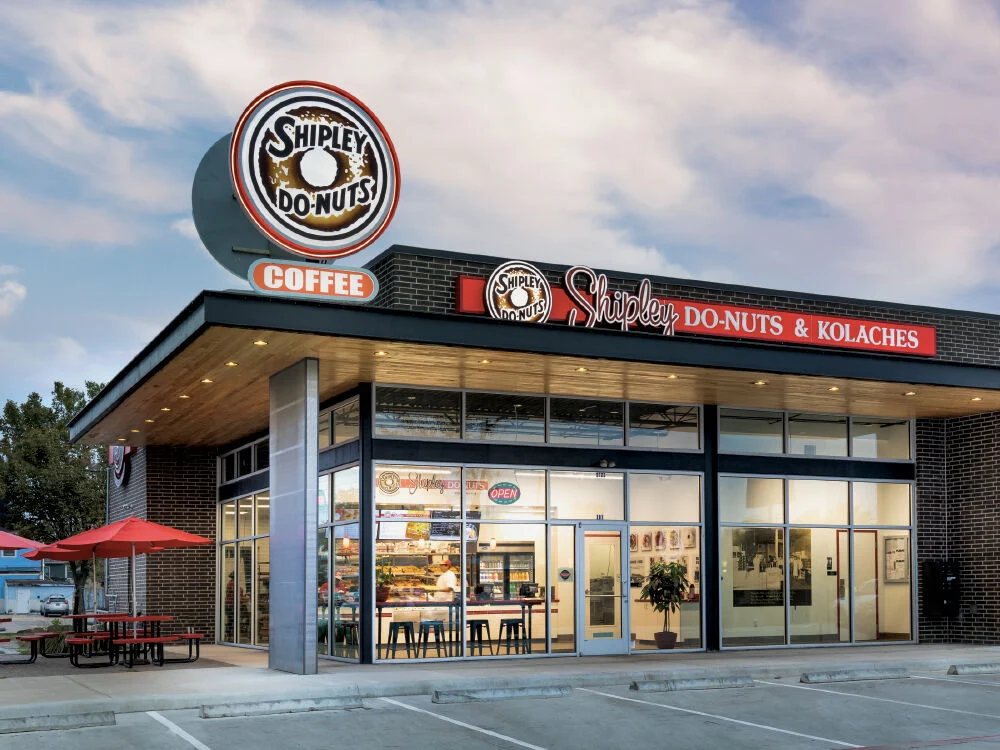
Shipley Do-Nuts | Stronger Systems. Smoother Operations.
How 5&5 helped Shipley Do-Nuts standardize digital onboarding across 30+ new locations in a single year without adding headcount.
Restaurant Digital Implementation | POS & Tech Setup
How 5&5 handles POS integration, delivery platforms, and franchise onboarding so new systems launch without disrupting day-to-day operations.
Learn more
5 Signs Your Restaurant Needs a New POS System
Covers the real red flags, from poor integration with CRM and loyalty tools to security risks on outdated Windows-based systems.
Restaurant Tech Stack Management | Navigate Complexity
A closer look at how growing brands keep POS, loyalty, and ordering systems working together instead of against each other.
How 5&5 Extends Restaurant Teams | Partnership Approach
How 5&5 takes on day-to-day execution so internal teams can focus on strategy instead of maintenance.
Shipley Do-Nuts | Stronger Systems. Smoother Operations.
How 5&5 helped Shipley Do-Nuts standardize digital onboarding across 30+ new locations in a single year without adding headcount.